In this week's issue, we take a look at a sedan turned sports car, a Golf dressed as a Beetle, and a Mercedes-based Chrysler. Their shapes tell stories of show-car inspiration, California design experiments, and some very demanding metalwork.
The classic · 1970
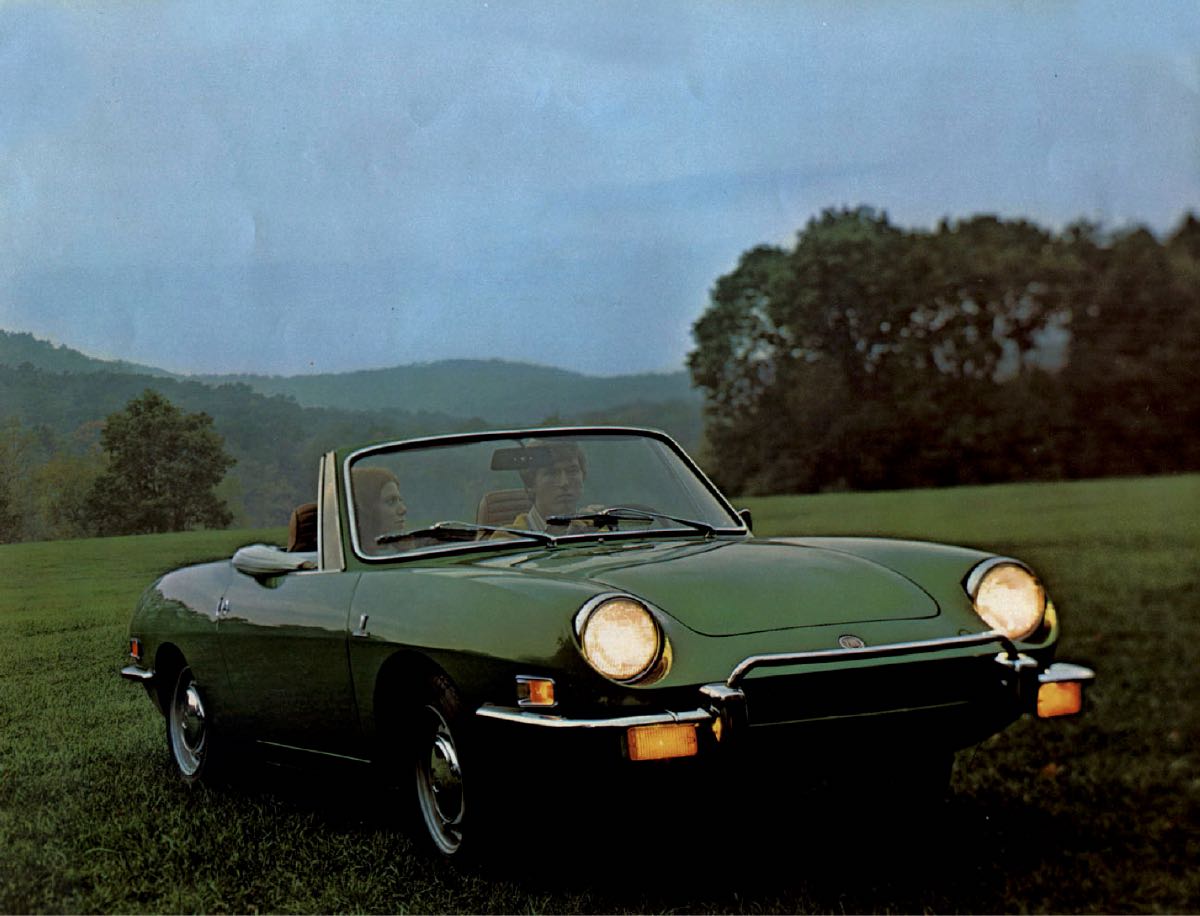
1970 Fiat 850 Sport Spider
The Fiat 850 Spider's original nose borrowed from a Chevrolet show car. Nuccio Bertone supplied the idea for the Spider; Giorgetto Giugiaro designed it with slanting headlights inspired by his Corvair Testudo prototype. By 1970, upright round headlights had replaced that early treatment, but the low, stretched body still disguised ordinary origins. Bertone designed and built the two-seater around the 850 sedan's drivetrain, axles and wheelbase.
Those proportions had consequences. In April 1968, Road & Track found the Spider about three and a half inches lower throughout than the related Coupé, including the seats and steering wheel, and credited that with better handling. It was roughly seven inches longer, all at the front, and 50 pounds heavier. The longer nose reduced the rearward weight bias; mounting the spare horizontally preserved nearly as much luggage space as the Coupé.
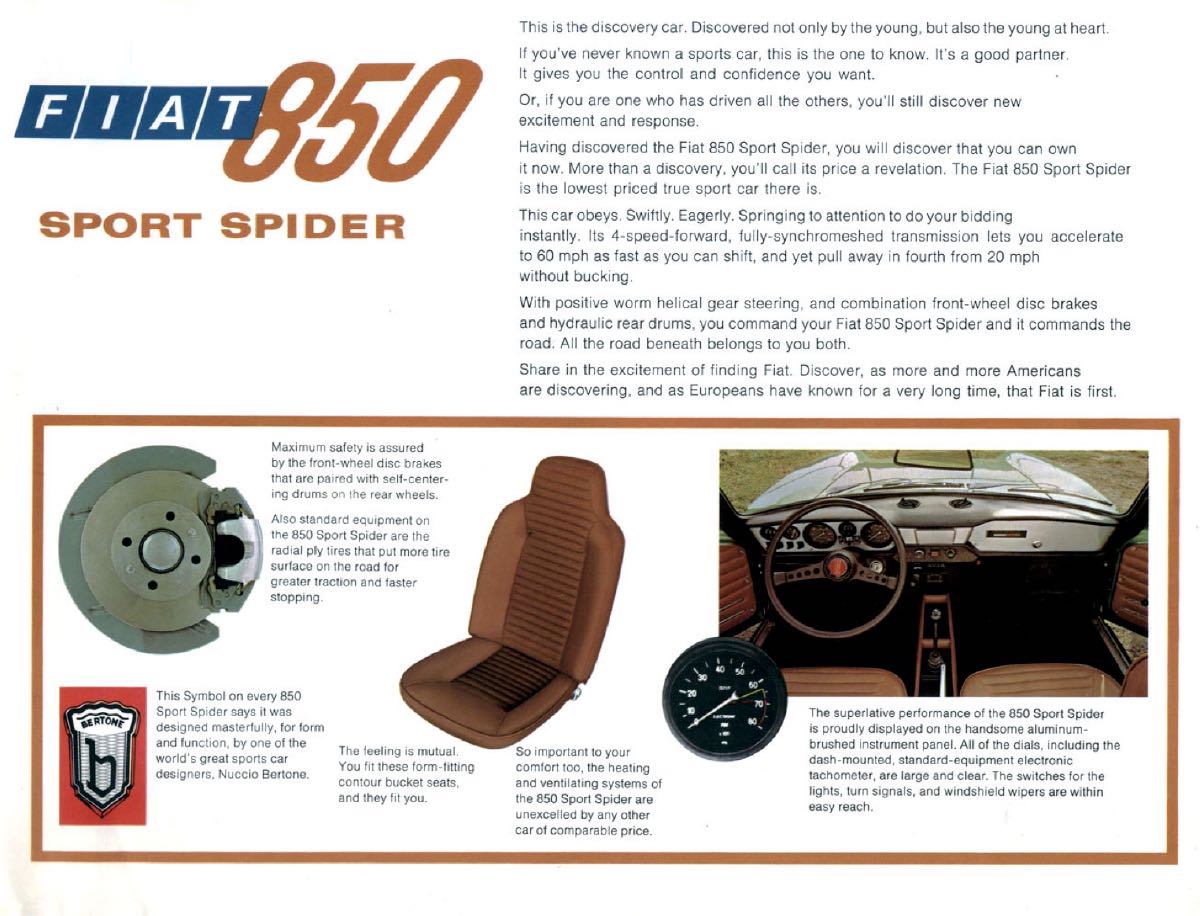
The 1970 Sport Spider kept the 850 badge despite its 903-cc engine, with overhead valves and a twin-barrel carburetor. Two years earlier, Fiat had moved in the opposite direction: the American test car's engine shrank from 843 to 817 cc to fall below the 50-cubic-inch threshold for required smog equipment. Crankcase recirculation remained. The later car paired its larger four with a fully synchronized four-speed, front disc brakes and standard radial tires.
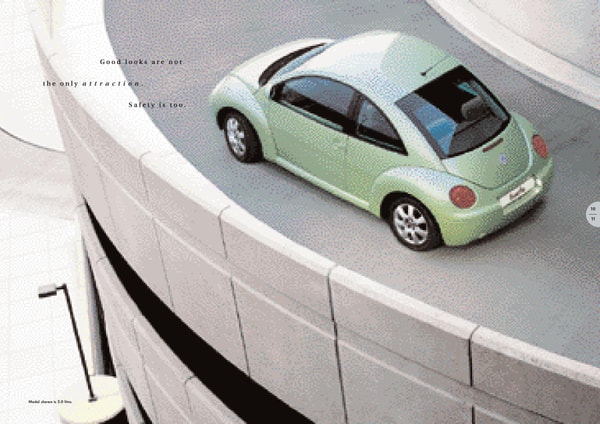
Volkswagen gave familiar small-car hardware an older identity. The 1998 New Beetle put a modern Golf platform beneath a shape developed from J Mays and Freeman Thomas's Concept One, created at VW's Simi Valley studio. The designers reduced the old Beetle to three arches: the roof and two fenders. Thomas recalled combining Mays's cleaner Bauhaus approach with his own more whimsical model, rather than simply copying the original body.
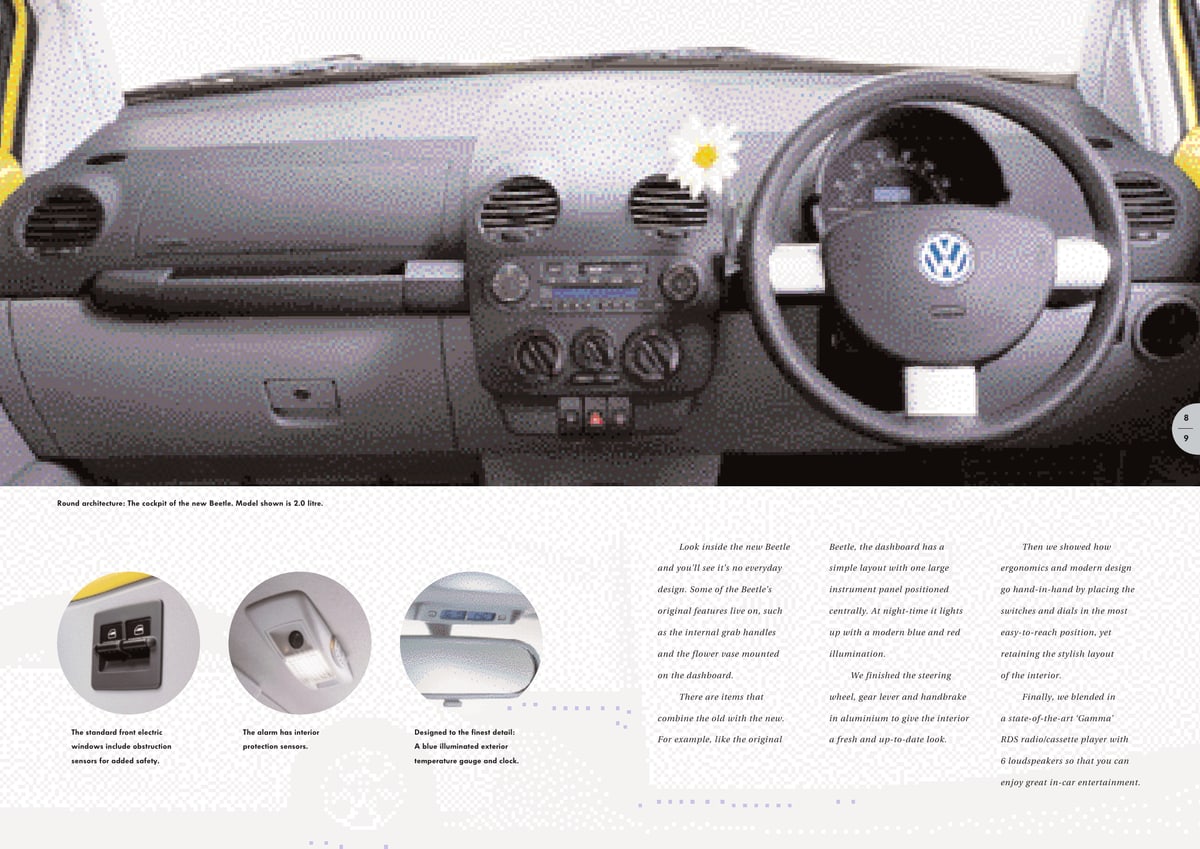
The engine was now a water-cooled four mounted transversely up front, driving the front wheels. That rounded body sacrificed some of the Golf's practicality: in his 1998 test, Carey Russ found generous front-seat space but less rear headroom and luggage room. VW gave the cabin modern safety equipment, too. The front side airbags were mounted in the seats, so they moved with their occupants as the seats were adjusted, preserving the airbags' position relative to the people they protected.
The standard dashboard bud vase had a longer history than its flower-power associations suggested. Porcelain vases had been optional dealer accessories for American Beetle buyers in the 1950s; the New Beetle's version was acrylic. According to Volkswagen's history, automobile vases dated back to the late 1800s, when fragrant flowers helped cover engine smells and passenger odors in cars without air conditioning.
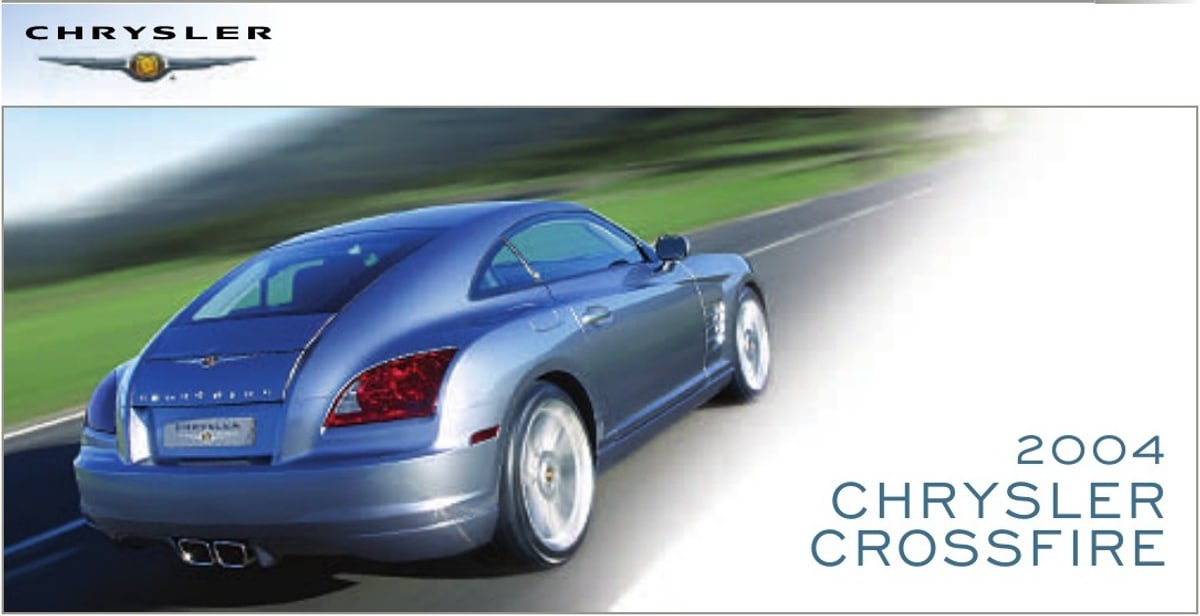
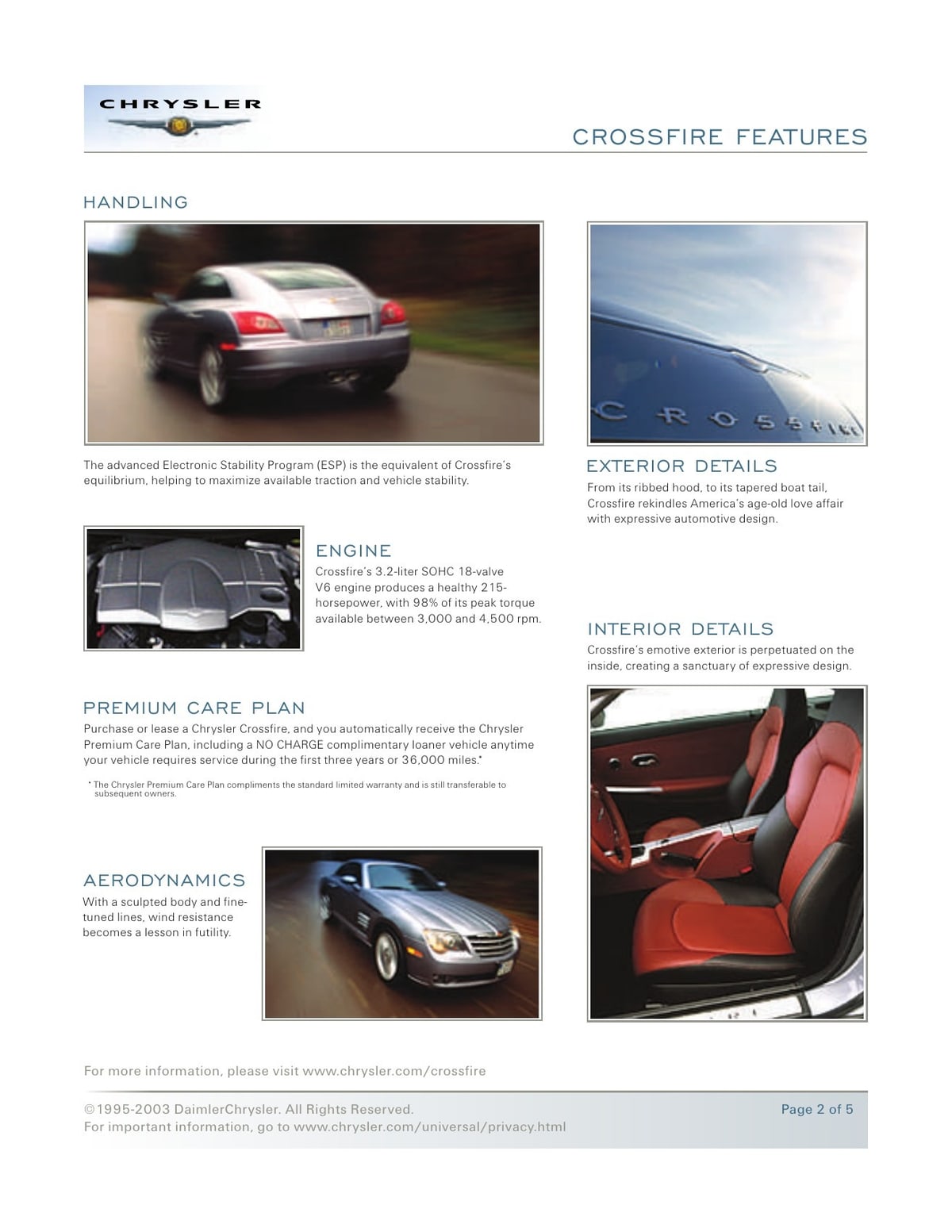
Chrysler also started with familiar machinery, but the Crossfire's shape needed more than a change of badges. Beneath the 2004 coupe sat Mercedes-Benz SLK architecture and a 215-hp, 3.2-liter V6. Turning Eric Stoddard's show car into something that could use those parts fell to Andrew Dyson's team. They widened its tapered boat tail and shortened the concept's wheelbase by about eight inches, while retaining the long hood and fastback profile.
Even the name came from the bodywork. Dyson explained that Crossfire referred to the crease along the car's side changing from an indentation to a raised line. A separate center spine ran along the body and reappeared inside, across the dashboard, down the console and over the gearshift knob. It was an unusually thorough way to carry an exterior theme into a cabin whose basic dimensions came from another car.
Those surfaces took work to manufacture. Project leader Art Anderson described a one-piece rear quarter panel extending from the base of the windshield pillar to the taillight pocket. It required six hits in the press. The team considered making it from two brazed pieces, but computer analysis showed that a single panel was feasible. Karmann's stamping expertise helped win it the manufacturing job. Borrowing the Mercedes mechanicals saved development work; producing Chrysler's new shape still demanded some complicated metalwork.